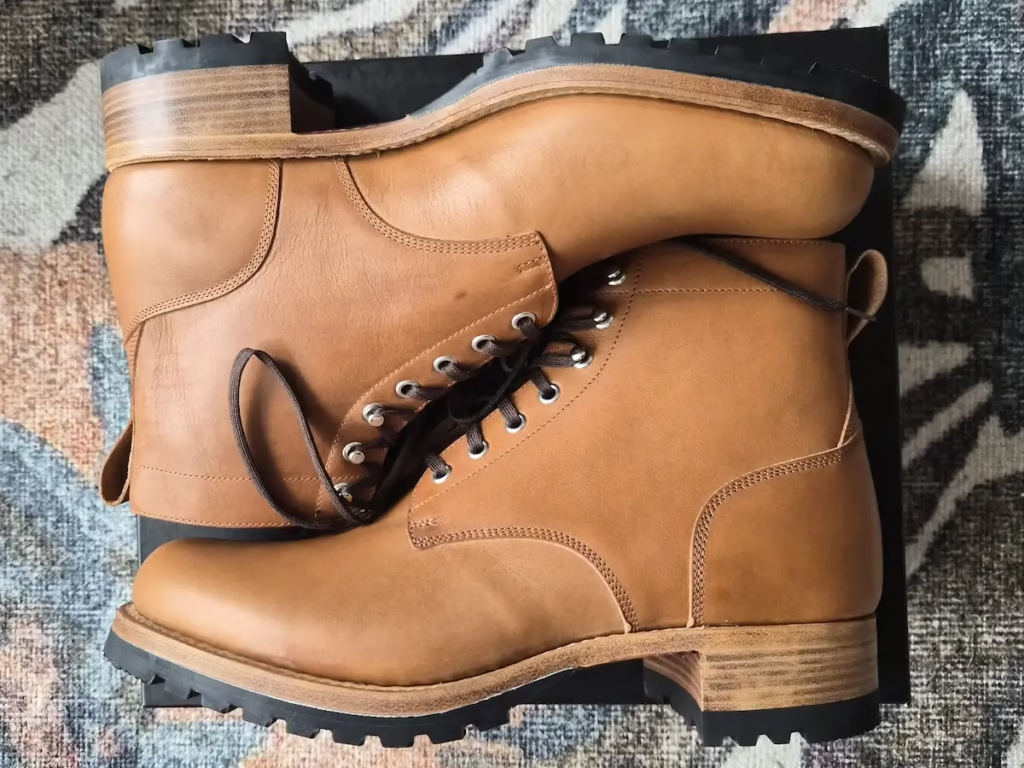
Saddleback leather Co Huntsman Boots – Natural Vegetable Tanned Leather
Most people know Saddleback Leather for its bags. The Texas company built its reputation on full-grain leather goods, a 100-year warranty and a tongue-in-cheek slogan about your relatives fighting over your stuff after you’re gone. Over the last year or so, Saddleback has also been building a serious footwear line, starting with the leather-soled Officer’s Boot. The Huntsman is its rugged, rubber-soled sibling, and the Natural colourway is the one that caught my eye.
This post covers how the Saddleback Huntsman boots are made, the unusual last they’re built on, how to size them.
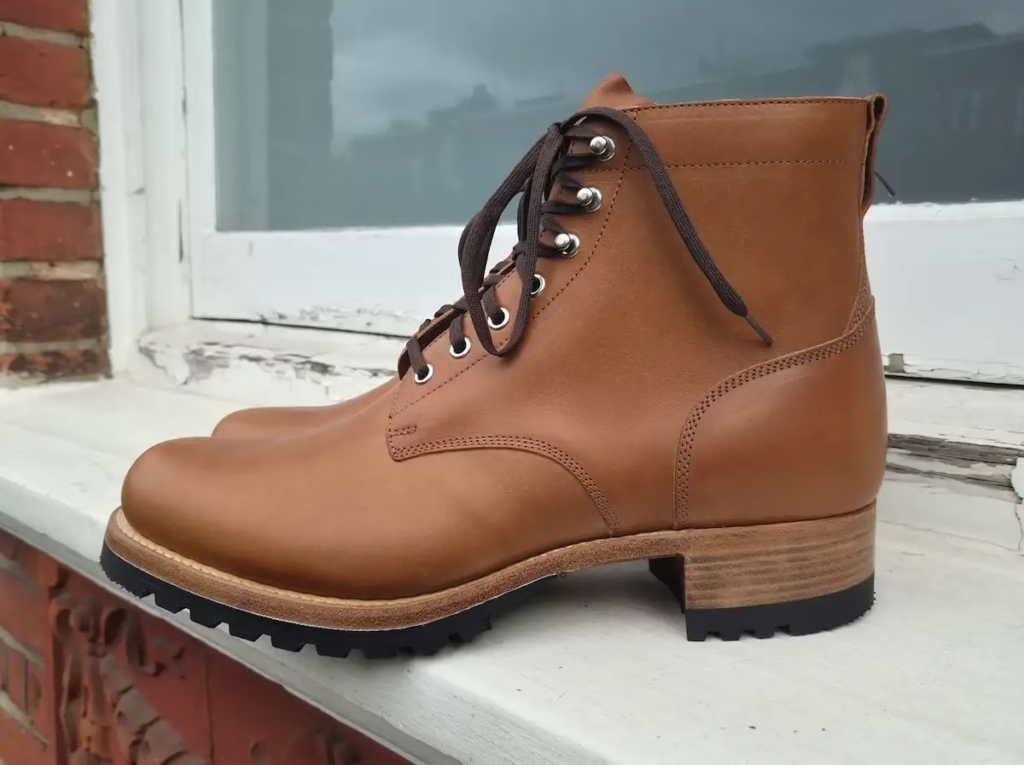
What Is the Saddleback Huntsman Boot?
The Huntsman is a lace-up boot meant to work hard outdoors and still look good in town. It’s handmade in Italy and built on Saddleback’s version of the historic Munson last. It sits on a new, patent-pending rubber outsole the brand calls the Good Sole. It comes in two colourways, Natural and Dark Coffee Brown, both priced at $679.
| Detail | Saddleback Huntsman Boots |
|---|---|
| Price | $679 (US) |
| Colourways | Natural, Dark Coffee Brown |
| Upper | Full-grain, vegetable-tanned Italian leather, stuffed with natural fats and oils |
| Construction | Goodyear welt, hand-lasted |
| Made in | A small family-run workshop in Italy |
| Last | Based on the 2nd generation Munson last |
| Outsole | Saddleback’s patent-pending Good Sole (lugged rubber) |
| Heel | 80-hardness rubber heel over a stacked leather heel |
| Sizes | US 6 to 12.5 in half sizes, then 13, 14 and 15 |
| Widths | Standard (C/D) and Wide (just over D up to E½) |
| Warranty | 100 years |
Built on the Munson Last
The most unusual thing about the Huntsman isn’t the leather or the sole. It’s the shape. The Munson last was developed for the US Army between 1908 and 1912, after a study of around 2,000 soldiers’ feet. Boots built on its various generations were standard US military issue from the First World War into the Vietnam era. Saddleback says its version is based on the more elegant first and second generations, resculpted to look more refined. Dave Munson also notes that the original’s creator was a relative of his.
In practice, the boot holds your heel and arch snugly but gives your toes much more room than most heritage boots. The inside edge also runs straighter, so your big toe isn’t pushed inwards. If narrow, tapered lasts have given you trouble, this could be the boot that finally fits. If you prefer a sleek silhouette, the roomier toe may take some getting used to visually.
There are two more things to know. Saddleback deliberately builds its boots with no arch support and no padding, relying on layers of leather underfoot instead, and says some wearers need time for their feet to adjust. One Huntsman owner who works 12-hour shifts added a thin foam insole for a little cushioning. Bear that in mind if you’re on your feet all day.
I found the Munson Last to be very comfortable for my wide feet. I got 11.5 E as my sizing. As my brannock is between 11.5 and 11, and D and E. which can be a bit of a nightmare to size some times. but I decided I wanted to wear thicker socks and have space. They fit really comfortable and I have no complaints on sizing.
Sizing and Fit
Saddleback calibrates its sizing to the Brannock device and says the boots run true to size. Its guidance is to never size down by half. If you’re an EE, go half a size up and choose Wide; if you have a high instep, choose Wide. Try the boots on indoors on carpet only, because pairs with scuffed soles can’t be returned.
The Good Sole: Saddleback’s Own Rubber Outsole
Saddleback developed its own layered rubber sole for the Huntsman. A harder 70-rated rubber meets the road at the forefoot, with a softer 60-rated shock-absorbing layer above it. The heel is a tougher 80-rated rubber, screwed down into a stacked leather heel. The brand says the sole resists oil, chemicals and UV, grips well in cold and wet conditions, and won’t harden or crack with age. The lugs are moderate: enough bite for fields and trails, without making the boot look like a logger.
Natural vs Dark Coffee Brown
Both colourways cost the same, so the choice comes down to how you want the boots to age. Saddleback uses full-grain, vegetable-tanned leather that the Italian tannery impregnates with natural fats and oils over two to three days. In the lighter Natural shade, that kind of leather records everything: sunlight, conditioner, rain spots and the creases of your stride. Expect it to darken noticeably within a few months of regular wear. Dark Coffee Brown hides scuffs better and looks a little dressier from day one.
The upper leather is very comfortable from day 1. One of the things that can be very daunting for PNW boots, is that the upper takes forever to be broken in and become comfortable. The veg-tanned upper did not cause any blisters or heavy, so it’s very easy to wear.
Huntsman vs Officer’s Boot
Both boots cost $679, and both are made in Italy on the Munson last with Goodyear welts and a 100-year warranty. The big difference is underfoot. The Officer’s Boot uses a leather outsole with closed channel stitching. That looks sharper, but it gives up grip on wet pavements. The Huntsman’s lugged rubber sole makes it the more practical choice for a British autumn and winter, and for anything involving mud. One reviewer who owns two pairs of Officer’s Boots said he’d added Soleguards to them for grip, and found the Huntsman nearly perfect straight out of the box.
Pros and Cons
What I like
- Goodyear welted in Italy and backed by a 100-year warranty
- A roomy Munson toe box, with Standard and Wide options
- A grippy rubber sole that suits British weather
- Natural veg-tan leather that should build a serious patina
What to consider
- $679 before UK VAT, duty and brokerage fees
- The proprietary sole may complicate like-for-like resoles
- No cushioning or arch support, so expect an adjustment period
- Natural leather marks easily in the early months
- The Munson toe shape won’t suit everyone’s taste
Who Should Buy the Saddleback Huntsman?
The Huntsman suits someone who wants one boot that can go from a muddy field to the pub, especially if your forefoot is wider than most heritage lasts allow. The Natural colourway is for people who enjoy watching leather change. If you want a cushioned ride or a sleek, tapered profile, look elsewhere. If you want rugged and repairable on a tighter budget, the Jim Green 719 costs a fraction of the price.