John Lofgren Wabash Engineer Boots Review: Natural Chromexcel
These are my third engineer boots. I have sold both of my engineer boots, the first one was from Briselblack, made in Indonesian boots. The other was from Wesco. I ended up selling them due to various reasons. Like it was uncomfortable, or just too heavy for Wesco’s case. I wanted to try again, and didn’t want to give up. I have to say it’s not a cheap thing to do, trying to buy and try them on for a while to see if the boots are okay or not. I understand, so I hope this review helps at least one person.
If you have been researching high-end engineer boots, the John Lofgren Wabash has likely appeared near the top of your list. It sits at the upper end of the market, competes directly with other premium Japanese-made engineers, and has developed a strong reputation since its 2012 debut.
This review covers the Natural Chromexcel version specifically. Natural CXL is an undyed, unfinished leather that behaves differently slightly from coloured variants, and it deserves its own detailed look. We will cover the leather, construction, last, fit, sizing, comfort, value, and who this boot is and is not right for.
A fun fact: I searched online that the Wabash is a river in Arizona, USA.
What Is the John Lofgren Wabash Engineer Boot?
The Wabash is John Lofgren Bootmaker’s flagship engineer boot. It is built in Japan at one of the country’s most respected bootmaking factories, and every material decision reflects that positioning. The design is based on John Lofgren’s personal archive of vintage 1950s engineer boots. The goal was not to modernise the engineer boot silhouette but to reproduce it as accurately as possible using the best available materials.
The result is a boot aimed at buyers who know exactly what they want: period-correct proportions, premium leather, resole-ready construction, and a finish that will age over years rather than seasons.
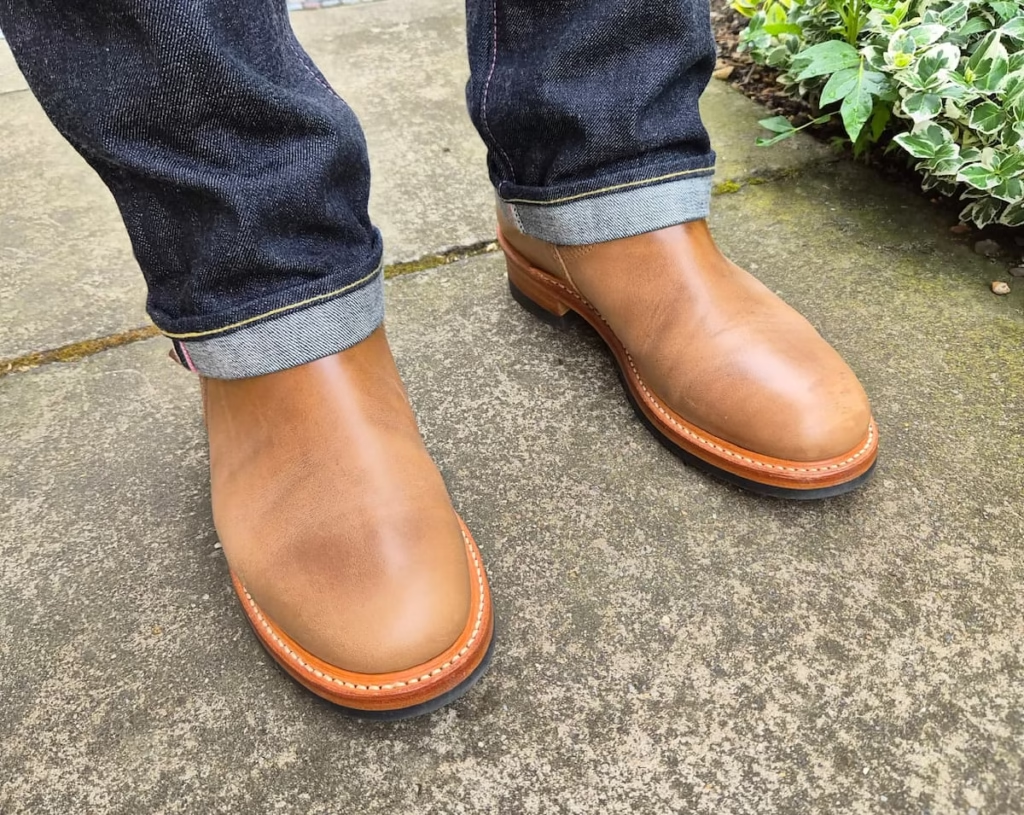
Leather: Horween Natural Chromexcel
What Is Natural Chromexcel?
Horween Chromexcel is one of the most recognised leathers in the heritage boot world. It is a combination tanned cowhide produced at the Horween tannery in Chicago, USA. The tanning process uses a combination of chrome and vegetable tanning, followed by a hot stuffing process that fills the leather with oils, greases, and waxes.
The result is a leather that is soft out of the box, self-healing to light scuffs, moisture resistant, and known for developing a deep, rich patina over time.
Natural Chromexcel is the undyed variant. No pigment or dye has been applied to the surface. This matters for a few reasons:
- Starting colour: Light tan, almost beige in some light
- Variation: Individual panels on the boot may start as slightly different shades of tan or brown
- Ageing: The leather darkens gradually with light, moisture, and wear. It is a slow process compared to waxed leathers, but the end result is considered by many to be among the best-looking patinas in footwear
- Reactive: The leather responds noticeably to conditioning, water, and sun exposure. Applying a dark conditioner will shift the colour permanently
John Lofgren does not buy standard-grade Chromexcel. According to Standard and Strange, the brand selects only the highest quality grade hides available from Horween. This means tighter grain, fewer imperfections, and more consistent character across the hide.
Natural CXL vs Other Colourways
Buyers choosing between Natural and Black or Burgundy Chromexcel should understand the trade-off clearly.
Natural is the most dynamic of the three. It will look meaningfully different after six months of wear than it does on day one. Some buyers find the starting colour too pale and need patience before the boot settles into something they love. Those who stick with it consistently report excellent results.
Black and Burgundy are more immediately wearable from a visual standpoint. They are easier to style across different wardrobes. Natural is a longer-term investment in patina.
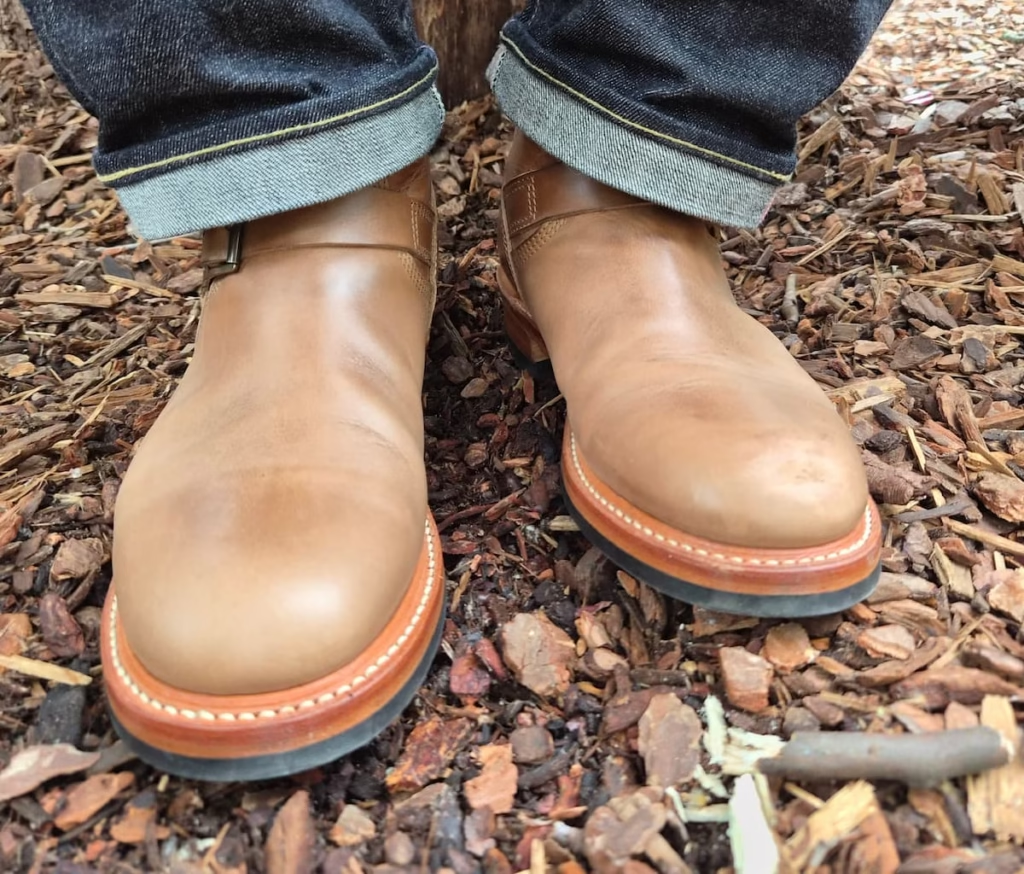
Last: The John Lofgren 110 Last
The 110 last is a custom last designed by John Lofgren. It produces a 1950s silhouette with the following characteristics:
- No toe bump (the slight upward curve seen on many modern engineer boots)
- Tapered toe shape
- Relatively close fit through the vamp
- Approximately D width
The absence of the toe bump is significant. Many reproduction engineer boots include a slight upward curl at the toe to ease walking. The Wabash does not. This keeps the silhouette lower and more period-correct, but requires some adjustment in fit and gait for first-time wearers.
Construction Method
The Wabash uses Goodyear storm welt construction. This is a specific variant of Goodyear welting where the welt is folded upward along the sides of the boot, creating a protective ridge that improves water resistance. It is the correct construction method for an engineer boot with workwear heritage.
Key Construction Details
- Welt: USA-made storm welts
- Welting technique: British Goodyear welting method
- Outsole: Vibram 705 half sole (USA-made, oil resistant)
- Heel: Vibram 700 stacked woodsman heel
- Shank: Japanese-made steel shank
- Hardware: Brass-coated steel buckles, made in Tokyo
- Stitching: Heavy single, double, and triple stitching across the upper
- Labels: Woven on shuttle looms
- Heel attachment: Nails combined with heated adhesive for permanent bond
Goodyear welt construction means the sole can be replaced. At this price point, resolability is an expectation rather than a bonus.
Why This Construction Matters
The storm welt adds a layer of water resistance compared to a standard flat welt. The Vibram 705 is a dense, oil-resistant rubber compound used across serious workwear and heritage boot production. It provides grip and durability on most surfaces without the excessive thickness or bounce of a lug sole.
The steel shank runs through the midsole from heel to ball, providing structural rigidity and arch support. It also prevents the boot from folding under load, which is particularly noticeable on uneven surfaces.
Measurements
- Shaft height: Approximately 10.75 inches (measured from insole at heel)
- Total boot height: Approximately 12.5 inches
- Heel height: 1.75 inches (stacked woodsman heel)
Fit and Sizing
Sizing Recommendation
The 110 last runs large. Every major retailer gives the same guidance:
- Size down 0.5 from your Brannock measurement
- Equivalent to your Red Wing Iron Ranger size
- Equivalent to your Alden Barrie last size
- 0.5 up from your Viberg 2030 last size
Fit Notes
The 110 last fits approximately D width, which is a standard medium. Width fittings outside this range are not offered. Buyers with particularly wide or narrow feet should take this into account.
The toe box has a tapered shape without the traditional engineer bump. First-time wearers in this last often find the toe area slightly unfamiliar. With Chromexcel’s natural softness, the break-in period is manageable. The leather yields relatively quickly compared to stiffer leathers like shell cordovan.
I have also read that it is important to get the shaft volume right, as the boot needs to slide on and off without a zipper or lacing system. Luckily the shaft is not too wide, so the pants do not have to be wide.
I am wearing size 11D, my brannock is size 11.5 width being between D and E. I wish it was slightly wider, but it’ll lose its tapered look. I guess if I wanted to have an engineer boots that’s wide enough, I would have ordered from other custom bootmakers, such as Nicks Boots. The length of the boots are perfect, it’s long enough, and doesn’t cause huge amounts of heel blisters. My previous Wesco boots actually caused crazy heel blisters, while these didn’t.
You will, of course, experience some heel slippage. It is expected with any kind of slip-on footwears. As long as they are comfortable for you, it’s normal.
Comfort and Break-in
Chromexcel leather has a natural give that most other upper leathers do not. The boot does not require an aggressive break-in compared to shell cordovan or stiff vegetable-tanned leathers. Most wearers report the boots becoming noticeably more comfortable after a few full days of wear.
The Vibram 705 outsole is firm. It does not have the cushion of a modern EVA midsole. If you are not used to it, it’s not easy to get used to.I have nothing bad to say about Vibram out soles. However the midsole is quite thick and it will take a bit of time for it to be broken in.
The steel shank provides structured arch support throughout the day. As a heavy person, this is very much needed. I cannot imagine wearing shoes with heels this high without any shank, as it’ll just be too uncomfortable.
Durability
Chromexcel leather is built to last under regular wear. The combination of oils and waxes in the tannage makes it resistant to moisture, and it recovers well from light scuffs and surface marks. Over time, the leather becomes richer and denser in appearance rather than deteriorating.
The Goodyear storm welt construction means the boot can be resoled multiple times over its lifespan. Given the cost of the boot and the quality of the upper, resoling is a realistic long-term option rather than an optimistic one.
Brass-coated hardware holds up well under regular use. Buckles are a wear point on any engineer boot, and the Tokyo-made hardware on the Wabash is consistently reported as solid.
Maintenance
Natural Chromexcel requires a light approach to care:
- Regular brushing to remove dust and surface dirt
- Conditioning with a neutral wax or oil-based conditioner (avoid heavy dark conditioners unless you intend to shift the colour permanently)
- Water resistance is moderate out of the box and improves with conditioning
- Mink oil or leather balm works well for keeping the leather supple
Avoid silicone-based products. The Chromexcel tannage responds well to natural waxes and oils.
Price and Value for Money
At $1,155 USD, the Wabash is near the top of the market for production engineer boots. It is priced above Red Wing, Wesco, and most Chippewa engineers. It sits alongside Clinch and Viberg at the high end of the Japanese heritage market.
Is It Worth the Price?
That depends on what you are buying for.
If you want a production engineer boot with correct vintage proportions, top-tier leather, Japanese craftsmanship, and a boot that can be resoled and worn for a decade or more, the Wabash justifies its price. The leather selection alone, using the highest grade Horween Chromexcel hides, represents a meaningful difference in quality over mid-market alternatives.
If you are looking for your first engineer boot or are unsure whether the style works for you, starting at this price point is a significant commitment. Trying a lower-cost alternative first is a sensible approach.
Pros
- Top-grade Horween Natural Chromexcel
- Correct 1950s silhouette with no toe bump
- Goodyear storm welt construction, fully resolable
- Vibram 705 outsole for genuine durability
- Steel shank for structural support
- Brass hardware made in Tokyo
- Made in Japan at a highly respected factory
- Natural CXL develops exceptional patina over time
Cons
- $1,155 is a significant spend for a single pair of boots
- The 110 last could be tricky
- Natural CXL starts pale and takes time to develop its character
- Vibram 705 outsole is firm underfoot
- No wide or narrow width options
- Pre-order windows mean you may wait months for delivery
- Not available in every retailer at all times
Who Is This Boot For?
Buy the John Lofgren Wabash in Natural Chromexcel if:
- You want a period-correct 1950s engineer boot silhouette
- You are committed to wearing the boot regularly and developing its patina over time
- You understand heritage leather care and are comfortable with a gradual break-in
- You want a production boot that can be resoled and worn for many years
- You have existing John Lofgren, Alden, or Red Wing Iron Ranger sizing knowledge
Look elsewhere if:
- You want immediate visual impact from day one without a development period
- You prefer a more cushioned or modern-comfort outsole
- You need a wide or narrow width option
- You are buying your first engineer boot and are not yet committed to the style
- Budget is a significant factor