How to Identify Goodyear Welted Shoes: A Guide for Fashion Buyers
When it comes to investing in quality footwear, Goodyear welt construction is a term you’ll encounter frequently. Renowned for its durability, comfort, and repairability, Goodyear welted shoes stand as a hallmark of premium craftsmanship. But for those new to the shoe world—or even seasoned buyers—distinguishing a true Goodyear welt from other construction methods can be challenging.
In this guide, we’ll break down the key characteristics of Goodyear welted shoes, offering practical tips and expert advice on how to identify them. Whether you’re buying your first pair or expanding your collection, this comprehensive guide will help you make an informed choice. Let’s dive into what makes Goodyear welted shoes a worthwhile investment and how to ensure you’re getting the real deal.
Table of Contents
What Is Goodyear Welt Construction?
The Goodyear welt is a time-tested shoe construction method invented in 1869 by Charles Goodyear Jr. This technique involves stitching a strip of leather (the welt) to the shoe’s upper and insole, and then attaching the outsole to the welt. The result? A durable, water-resistant shoe that can be resoled multiple times, extending its lifespan significantly.
Goodyear welted shoes are favored for their:
- Longevity
- Comfort (due to cork filling that molds to the foot)
- Versatility across formal and casual styles
While this method is labor-intensive, it ensures exceptional quality and value.
Key Features of Goodyear Welted Shoes
Visible Welt Stitching
One of the easiest ways to spot a Goodyear welted shoe is by examining the welt stitching:
- Look for a visible strip of leather (or occasionally synthetic material) running along the shoe’s perimeter.
- The stitching secures the welt to the outsole and upper, creating a durable bond.
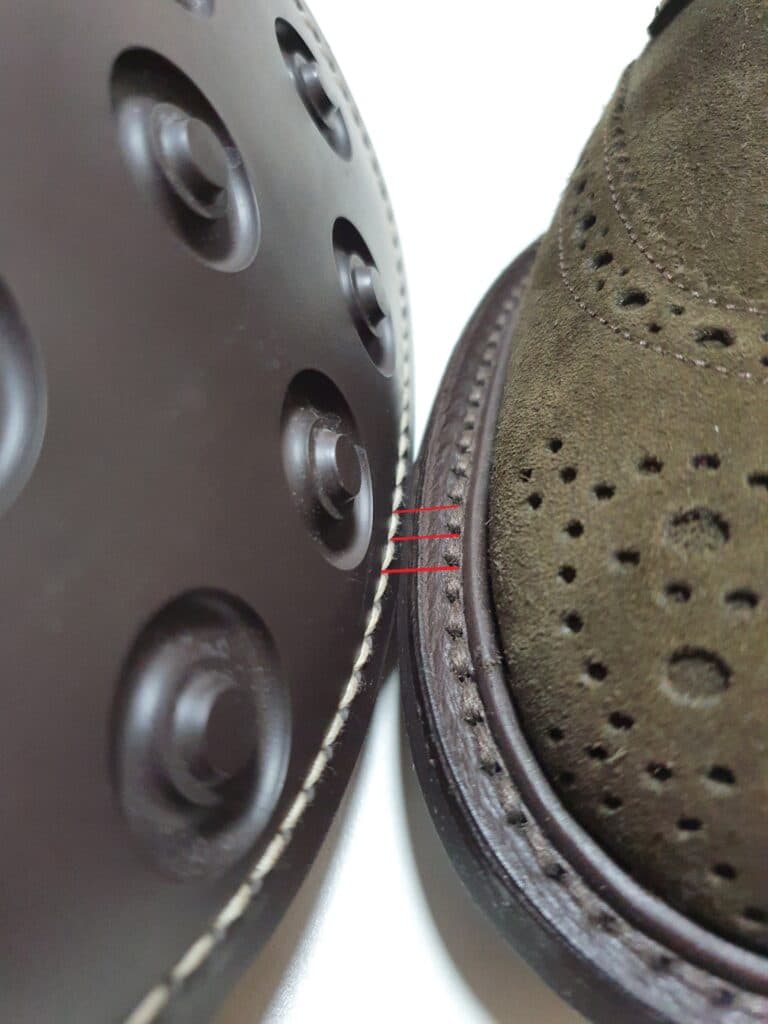
Consistent Stitch Density
- A hallmark of Goodyear welted shoes is consistent stitch density on the top of the welt and the bottom of the outsole.
- Inconsistent stitching or mismatched patterns may indicate a faux welt or decorative stitching rather than functional construction.
How to Identify Goodyear Welted Shoes
Stitching Patterns
Inspect the Welt: The stitching should be visible both above and below the welt. A high-quality Goodyear welt will have:
- Evenly spaced stitches.
- Matching stitch patterns on the top and bottom.
Check for Faux Welts: Some manufacturers create the illusion of a welt by gluing two pre-stitched pieces together. These faux welts often have mismatched stitching density between the top and bottom.
Avoiding Faux Welts
Faux welts can be deceiving. Here’s how to differentiate:
- Visible Glue Residue: Cemented (glued) shoes may show traces of adhesive where the sole meets the upper. This is a clear sign the shoe is not Goodyear welted.
- Flex Test: Gently bend the shoe. A real Goodyear welt will flex less than a cemented shoe due to its sturdy construction.
Manufacturer Labels
Most reputable brands will proudly state if their shoes are Goodyear welted, as it adds significant value:
- Check the product description, box, or label for terms like “Goodyear welted.”
- Trusted brands include Cheaney, Loake, and Grant Stone.
Common Misconceptions About Goodyear Welted Shoes
Myth 1: All Expensive Shoes Are Goodyear Welted
Price alone is not a definitive indicator. Some premium shoes use Blake stitching or cementing, which are different methods.
Myth 2: All Goodyear Welted Shoes Look Alike
The construction method doesn’t dictate design. Goodyear welted shoes come in various styles, from classic Oxfords to rugged boots.
Frequently asked Questions
What is the main advantage of Goodyear welted shoes?
- Durability and resoling capability, which extend the shoe’s lifespan.
Can faux welted shoes last as long?
- No, faux welts lack the structural integrity and repairability of true Goodyear welts.
How do I care for Goodyear welted shoes?
- Clean regularly, condition the leather, and resole when necessary.
Are Goodyear welted shoes water-resistant?
- Yes, the welt construction offers some water resistance, but they’re not fully waterproof.
What’s the difference between Goodyear welt and Blake stitch?
- Goodyear welted shoes have a visible welt and are easier to resole, while Blake-stitched shoes are sleeker but harder to repair.
Identifying a pair of Goodyear welted shoes is easier when you know what to look for. By examining the stitching, avoiding faux welts, and consulting manufacturer information, you can make an informed purchase. Investing in Goodyear welted shoes ensures you’ll have a durable, stylish, and repairable pair of footwear that stands the test of time.
If you’re considering a purchase, start with trusted brands like Viberg, Oak Street Bootmakers, or Grant Stone. Don’t hesitate to consult a local cobbler for expert advice.
What are your experiences with Goodyear welted shoes? Share your thoughts in the comments below, and let’s discuss why this construction method continues to define quality footwear.
Quick Takeaways
- Visible stitching around the welt is a key indicator of Goodyear welted shoes.
- Faux welts often feature mismatched or decorative stitching and are glued, not stitched.
- Trusted brands will clearly state if their shoes are Goodyear welted.
- Goodyear welted shoes are durable, water-resistant, and easy to resole.
- If in doubt, consult a cobbler or experienced shoe expert.